Blog Post #1
Thinking back on my elementary years, I find social studies to be a little bit of a blur compared to things like reading, writing, and math. However, there are a few key moments I do remember, and most of them regard fourth grade and fifth grade. I can recall learning about certain historical people, the civil rights movement within Black History Month, alongside the Boston Tea Party and the origins of Thanksgiving during my younger years. Despite the Thanksgiving story being heavily skewed, the experiences I remember are all positive. The issue, though, is that I truly do not remember much. I am fairly confident that I had to have learned more about social studies, but I can hardly recall any additional topics. I believe this might be due to the lack of hands-on learning that was offered. Each of the topics or events that I mentioned above all contained a memorable activity that ingrained the teachable information in my mind, even to the point where I can remember vivid details as an adult.
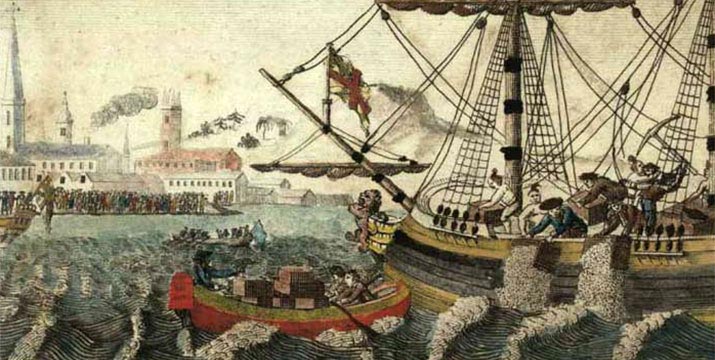
Of these activities, I can picture the Boston Tea Party lesson very easily. My second grade teacher randomly selected one student to be the class “king” who would tax all of the other students by collecting their m&ms. Each student received x amount of m&ms and over the course of the activity, we were unfairly taxed by the king for strange reasons that did not make sense. This was one of my favorite times in that classroom, as it was fun and helped me understand the Boston Tea Party to the best of my second grade ability.
Reflecting on this engaging activity, it becomes clear to me why it is so important to create meaningful experiences for students to participate in while learning about social studies. By allowing students to actually take on historical roles, they get a glimpse of a time frame they otherwise could not see for themselves. Additionally, memorable activities will aid students in their recall about the particular historical event or topic. In short, it seems to be a win-win type of lesson. I would define social studies inquiry as engaging opportunities that allow students to experience history for themselves.

Testing this out since you are having trouble
ReplyDeleteI feel the same way, I can remember a little bit here and but not as much as I should, the hands-on learning was defiantly lacking in my schooling as well. I like the project your teacher did for the Boston tea party. I think you are right that role playing with historical events and people is some that will help students retain the information. I think that instead of having their minds drift off like mine would do in school, this role play forces them to focus on the material and it is something that they enjoy. I can bet that the students would prefer this way of learning rather than reading the big old text book.
ReplyDeleteThanks for your input! Yes, I absolutely loved having the "honor" (my second grade heart thought everything was really special) to step into historical roles and play them out in the classroom. While I'm sure textbooks can be helpful sometimes, I really feel like I retained more through experience.
DeleteI can relate to you in the sense of having meaningful experiences in the older grades of elementary school. In my fifth grade class we "played the role" of the different forms of government. I believe allowing the students to have different opportunities to engage in the learning can be very beneficial because all student learn differently. But when students can have hands on learning by participating in the learning it helps young students understand important events if they . Do you think having students participate in the learning would be as effective in younger ages, middle school or high school?
ReplyDeleteThat is a great question. I think it could be really helpful in all grades, but I believe that it would be the most motivating in the younger grades. As I mentioned in a previous comment to Breanna, my second grade self thought it was really cool to be given a special historical role to play in class. I think this captures a lot of engagement initially in the elementary aged kids. However, I also remember conducting a mock-trial in my government class during my senior year of high school. Surprisingly, this really sparked some controversy and engagement among the students. I think it just depends on how you present the role playing.
DeleteI completely understand what you mean when you say that most of your social studies memories are from fourth and fifth grade, because I feel the exact same way. As disappointing as it is, it seems like many individuals do not remember much of what they learned in social studies during elementary school. Engaging activities are an absolute necessity in creating meaningful social studies units. Do you have any ideas for how you would want to teach about Thanksgiving in a more meaningful and accurate way with your future students? Also, how well do you think you grasped the full idea of the second grade Boston Tea Party example? Were you old enough and did the teacher explain the concept clearly, or would you have benefited more by doing this activity when you were a couple of years older? I enjoyed reading this blog and am so glad we have another class together!
ReplyDeleteThanks for the good and challenging questions! Thanksgiving is an interesting topic, as I feel like it was so skewed for so long. I would imagine by now that most schools are working towards an accurate representation of it. I think doing an indigenous studies day near Thanksgiving would be an awesome idea. We have a really amazing native population outside of Spokane, and I think that inviting a guest speaker in to share some Native American history and culture would be exciting. I do not feel like I fully grasped the Boston Tea Party in second grade. However, I do feel like I understood it much more than I would have it we had just participated in lecture-based learning or textbook reading. Thanks for the good feedback, Julia!
DeleteHi Emily, I agree with you about having meaningful activities that are engaging for social studies. The fun and engaging activities that I did in social studies were the lessons that I remember the most. Although, reading your blog reminded me about the pilgrims who sailed on the Mayflower and had their first Thanksgiving with the Native Americans. My teacher didn't mention what happened to the Native Americans after the dinner which was a horrible thing. I also remember learning about the Boston Tea Party, but I don't remember when I learned it. Maybe it was in sixth grade or in junior high. Do you think maybe social studies inquiry would also be about inquiring a question or talking about a problem that people face related to social studies and then maybe trying to solve the problem or finding out what really happened? Sorry that was a really long question, ha ha. I just think that maybe social studies inquiry is not only about engaging in a meaningful way, but also about solving a history mystery.
ReplyDeleteYes I like the way you worded that! Solving a history mystery (it rhymes, too), in my opinion is definitely a form of engagement and exploration! I wonder topics in history could be examined "under a magnifying glass" by students in order to dig into the truth more! Good idea!
Delete