Blog #4
While I was reading over the Hughes and Moran articles about project-based learning, I was genuinely mesmerized by how creative and exciting this must be for elementary school kids to have these kinds of lessons in their classrooms. The history narrative writing really stood out to me, as I can see where students really grow in empathy and understanding for one another when they have to write from a different perspective. The tool of seeing beyond your own life is something I believe every student should have, and it needs to be learned in school, as it is not a guarantee it will be learned at home. The Civil Rights example was awesome, as students really put their hearts into trying to write as if they experienced certain events first hand. Additionally, the paper bags project that the second grade classroom did to teach economics was awesome as well. These projects provide students with a lot of ownership that they do not get from reading out of a text and copying down answers.
 Based off of the readings, I believe that project based learning is a way to teach that most often spans over a unit. This form of teaching allows students to work on projects and learn through experiences. It strikes me as one of the most student-centered formats of instruction I have seen so far.
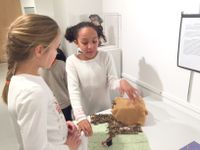 While researching, I found a Native American unit that a third grade class went through in Baltimore, and I really liked the steps that the teacher took to move students towards their exhibit project. Students engaged in discussion (often involving very controversial topics), field trips, planning with graphic organizers, and of course learning with books about Native Americans, as well. Then, the students were asked to find a topic that they would like to share with their community about Native Americans. Each student spent time during the unit creating their own exhibit and then displaying and teaching their peers about it. Administration, other classrooms, and families were invited to view the displays over the course of a week. I really loved this because students are gaining a lot of clarity and truth about Native Americans at a young age. This are so many skewed stories about this people group, and students deserve to have correct information. The unit heavily focused on depleting stereotypes and presenting the community with factual and fun information. I would love to do something like this with my future students!
Link to blog about unit: https://www.edutopia.org/article/bringing-social-studies-life-pbl
Based off of the readings, I believe that project based learning is a way to teach that most often spans over a unit. This form of teaching allows students to work on projects and learn through experiences. It strikes me as one of the most student-centered formats of instruction I have seen so far.While researching, I found a Native American unit that a third grade class went through in Baltimore, and I really liked the steps that the teacher took to move students towards their exhibit project. Students engaged in discussion (often involving very controversial topics), field trips, planning with graphic organizers, and of course learning with books about Native Americans, as well. Then, the students were asked to find a topic that they would like to share with their community about Native Americans. Each student spent time during the unit creating their own exhibit and then displaying and teaching their peers about it. Administration, other classrooms, and families were invited to view the displays over the course of a week. I really loved this because students are gaining a lot of clarity and truth about Native Americans at a young age. This are so many skewed stories about this people group, and students deserve to have correct information. The unit heavily focused on depleting stereotypes and presenting the community with factual and fun information. I would love to do something like this with my future students!Link to blog about unit: https://www.edutopia.org/article/bringing-social-studies-life-pbl


Emily,
ReplyDeleteOh, my yes, those projects were absolutely amazing, ha, I too was mesmerized at the creativity. I would love to try the narrative writing in my class I think the students would enjoy it and I would enjoy reading their stories. I have fallen in love with project-based learning, however, it seems a little intimidating to write and put together a lesson that big, don’t you think? That lesson you found would be so fun, I would take the presentation of the lesson a bit farther and have different classes from different grades in the school or parents come the “museum” the students created.
Breanna,
DeleteYes I definitely do feel the intimidation haha! Truthfully, a lot of our lesson planning alone is intimidating, so crafting an entire unit is wild to even think about! I think it would be really interesting to get an entire school on board to learn about something with such rich culture and history, such as the Native American people groups and tribes, or the Civil Rights Movement (like we read about in the article). If every grade simultaneously learned about this during one social studies unit, it would be really great to see what the students came up with for the museum portion of the unit!
Hey Emily,
ReplyDeleteI was also mesmerized by how willing teachers were to incorporate their creativity into their classrooms. While reading the articles, one of the first things I recognized was that setting up these projects would definitely take a lot of work. It was inspiring to see these teachers go the extra mile and put in the work, because unfortunately, many teachers would not. The students clearly benefit and are very engaged in what they are learning as well, proving that the teacher's hard work has payed off. It's so funny that you picked the Native American project to learn more about, because I picked the exact same one! Great minds must think alike :) As you stated, some of the discussions contained controversial topics. What are some ways you would facilitate discussion to make sure nothing got out of hand in your future classroom? I really enjoyed reading your blog, as always!
Thanks Julia!
DeleteI love that we picked the same example, because that credits how awesome it is! I agree that going the extra mile is definitely necessary in a unit like this one. I'm learning that it takes a lot of time to provide students with the best activities that contract engagement and focus. I think that facilitating discussion could have some hiccups, as a lot of history is skewed in regard to Native American groups. However, I think sticking to the facts is probably the best way to do so. If students move towards an area of false history, I would gently correct them in front of the whole class to clear up any misconceptions. Asking students to stick to the truth may actually be easier in the younger grades than older ones!
Emily,
ReplyDeleteI liked how in your first paragraph you talked about how students can grow from empathy and understanding from others when hearing out different perspectives, I think this is a really amazing thing which can be done with discussions and other projects. Having the students discuss the learning and allow students to feel comfortable to be able to talk to their peers, I think by having a student centered classroom can create this environment. I also loved the idea you were able to find, students can engage in discussions, attend field trips and read books that can grow their understanding and learning! Great post!
Emily, I agree with your comment about students needing to experience things outside of their own life. Learning about the civil rights movement in school might be the only place they learn about it and experiencing it through project-based learning might be the only place they express feelings towards it.
ReplyDelete